If your steering wheel is off-centre, your tyres are wearing unevenly, or the car starts to shake at speed, the question usually comes down to wheel alignment vs balancing. They sound similar, and plenty of drivers use the terms interchangeably, but they fix different problems. Getting the right service matters because the wrong one will not solve the issue, and it can cost you more in tyres and repairs over time.
Wheel alignment vs balancing: what is the difference?
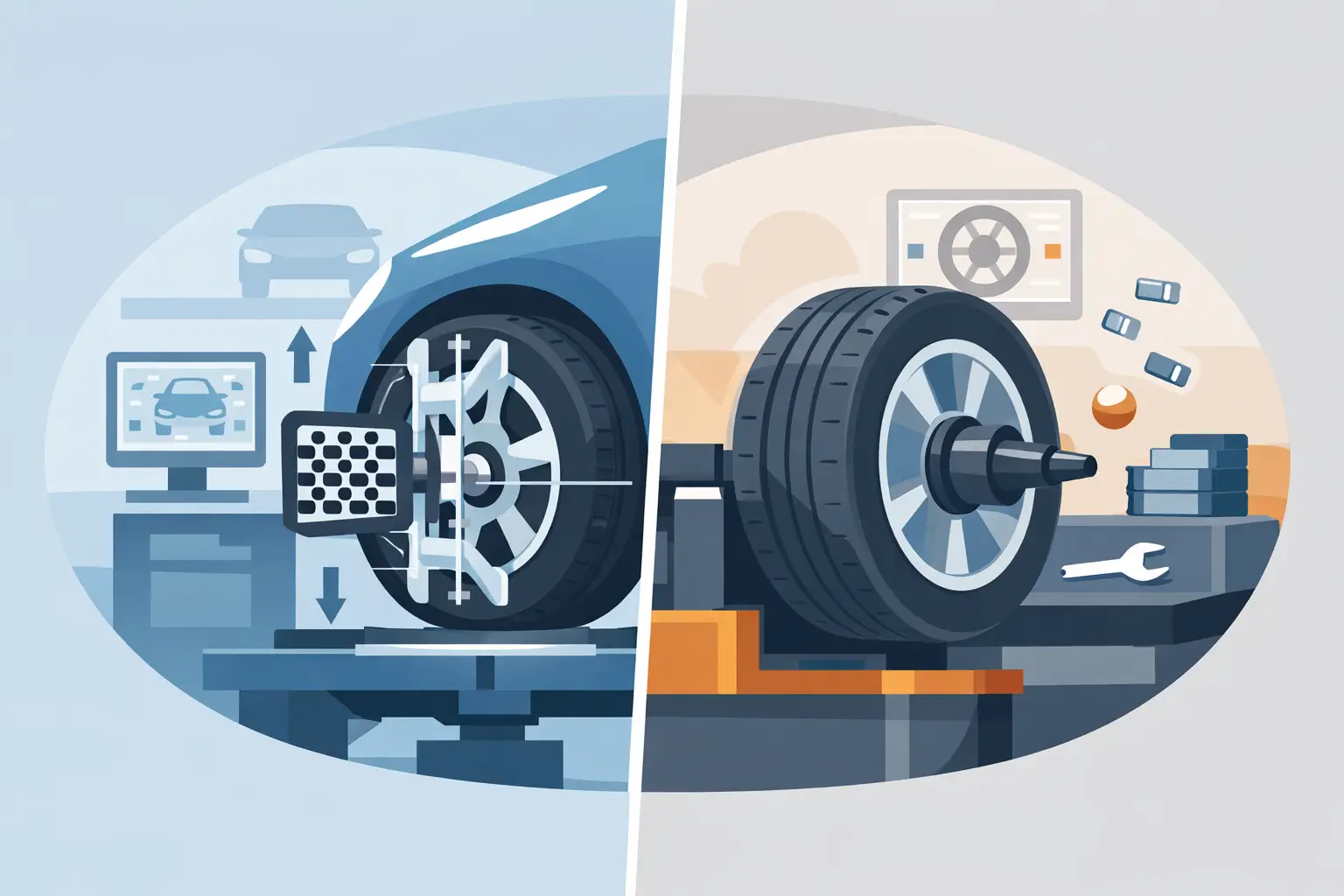
The simplest way to think about it is this: wheel balancing is about weight, while wheel alignment is about angles.
Balancing corrects uneven weight distribution in the tyre and wheel assembly. If one part of the wheel is slightly heavier than another, it can create vibration, especially as speed increases. A technician fixes that by using a balancing machine and adding small weights where needed.
Alignment is different. It refers to the angles of your wheels and how they sit relative to the road and each other. If those angles are out, the car may pull to one side, the steering wheel may sit crooked, and tyres can wear down much faster than they should.
Both services affect comfort, tyre life and safety, but they are not interchangeable. A balanced wheel can still be badly aligned, and a perfectly aligned car can still have wheels that are out of balance.
What wheel balancing actually does
When a wheel is out of balance, you will usually feel it rather than see it. The most common sign is a vibration through the steering wheel, seat or floor, often at around 80 to 100 km/h or higher. Around town it might feel fine, then on the freeway the shake becomes hard to ignore.
This happens because the tyre and wheel are not spinning evenly. Even a small weight difference becomes noticeable once the wheel is rotating quickly. Over time, that vibration can make driving less comfortable and contribute to tyre wear.
Balancing is usually done when new tyres are fitted, but it can also be needed later if a weight falls off, a tyre wears unevenly, or the wheel cops a hit from a pothole or kerb. In some cases, mud or debris stuck inside the wheel can even throw the balance out.
The service itself is straightforward. The wheel is removed, placed on a balancing machine, and adjusted with small weights until it spins evenly. It is not usually a long job, but it can make a noticeable difference to how the car feels on the road.
What wheel alignment actually does
Alignment deals with the direction your wheels point and the angle they contact the road. Modern alignment equipment measures settings such as camber, caster and toe. Most drivers do not need to know the technical detail, but the result matters.
If alignment is off, the tyres may scrub against the road instead of rolling cleanly. That creates premature wear and can affect handling. You might notice the car drifting left or right on a straight road, or the steering wheel sitting slightly crooked even when you are driving straight.
Bad alignment can happen gradually through normal wear in suspension and steering components, or suddenly after hitting a pothole, mounting a kerb, or being involved in a minor accident. It is also common after replacing suspension or steering parts.
This is why alignment is not just about keeping the steering neat. It protects your tyres, helps the car track properly, and can improve how stable and predictable it feels, especially on longer drives.
The signs you need balancing, alignment, or both
Some symptoms point clearly one way, while others overlap.
If the car vibrates at speed, balancing is a likely culprit. If the steering wheel shakes mostly on the freeway but the car still tracks straight, it is often a balance issue. If the steering wheel is off-centre, the car pulls to one side, or your tyres show uneven wear across the edges, alignment is more likely.
Sometimes both are needed. A car can have a vibration from unbalanced wheels and also be chewing through tyres because the alignment is out. That is why a proper inspection matters. Guessing based on one symptom can miss the bigger picture.
A few warning signs to watch for are uneven tyre wear, steering pull, a crooked steering wheel, vibration through the steering or cabin, and reduced comfort or stability on the road. If you have noticed any of these after fitting new tyres or hitting a pothole, it is worth getting checked sooner rather than later.
Why the difference matters for tyre life and running costs
Tyres are not cheap, and one of the most common reasons they wear out early is alignment problems. If the wheel angles are wrong, a tyre can wear down on one edge while the rest of the tread still looks usable. That means replacing tyres earlier than expected, even if the car still feels mostly driveable.
Balancing matters too, but in a different way. An out-of-balance wheel may not destroy a tyre as quickly as bad alignment, yet it can still create uneven wear and make the vehicle less pleasant to drive. Left too long, the constant vibration can also put extra stress on suspension and steering components.
For everyday drivers, the practical takeaway is simple. If your car does not feel right, do not wait for the next service and hope it sorts itself out. Small tyre and steering issues tend to become more expensive ones.
When should you get a wheel alignment or balance?
There is no single rule that suits every car, because driving conditions make a difference. A vehicle used mostly on smooth suburban roads will not cop the same punishment as one regularly driven on rough roads, over speed humps, or carrying heavy loads for work.
As a general guide, wheel balancing is commonly done whenever new tyres are fitted. Alignment is often checked when tyres are replaced, after suspension repairs, after a decent knock to the wheels, or when the car starts showing symptoms.
It also makes sense to have alignment checked periodically as part of sensible maintenance, especially if you do a lot of kilometres. For tradies, families with packed-out cars, and commuters doing regular freeway runs, keeping an eye on tyre wear can save money over the long term.
If you are unsure, ask for a proper inspection rather than booking services blindly. A trustworthy workshop will tell you what actually needs doing and what can wait.
Is wheel alignment vs balancing a one-or-the-other choice?
Not always. This is where some confusion comes in.
Drivers will sometimes book a balance because the car feels rough, when the real problem is alignment. Others will ask for an alignment because the steering feels odd, but the main issue is a wheel that is out of balance. And sometimes both issues are present at once, especially if the tyres have been worn unevenly for a while.
That is why the best approach is not choosing one based on the name alone. It is explaining the symptoms clearly. If the car vibrates at certain speeds, pulls to one side, has a crooked steering wheel, or has recently hit a pothole, those details help a mechanic pinpoint the cause.
At a local workshop like Auto Clinic and Parts, the goal should be to fix what needs fixing, not pile on extra work. Sometimes that means balancing only. Sometimes it means alignment. Sometimes the tyres or suspension need attention first, because an alignment will not hold if worn parts are throwing everything out.
What if new tyres did not fix the problem?
This catches a lot of people out. New tyres can improve ride quality, but they do not automatically correct alignment or balancing issues unless those services were done as part of the job.
If your car still pulls, vibrates, or wears tyres strangely after replacement, it is worth checking what was actually carried out. Tyres should be balanced when fitted, but alignment may be a separate service depending on the vehicle and the workshop process.
It is also possible for worn suspension parts to be part of the problem. If shocks, bushes, ball joints or tie rod ends are worn, tyre and steering issues can keep coming back. In that case, the right repair is not just about adjusting settings. The underlying wear needs to be addressed first.
The smart move when your car feels off
Most drivers do not need a lesson in wheel geometry. You just want to know why the car is shaking, pulling, or chewing through tyres, and you want an honest answer at a fair price.
That is really what wheel alignment vs balancing comes down to. They are two different services for two different issues, and the best result comes from diagnosing the actual cause instead of guessing. If something feels off, trust that feeling and get it checked before a small problem turns into a full set of tyres or bigger suspension work.
A car that drives straight, feels smooth, and wears its tyres evenly is usually telling you everything is working as it should.